

3 closed clients and 903,652 UAH in revenue in one month, with 19,200 UAH in advertising spend, are the figures from the dometall.com.ua Google Ads case. Previously, we discussed it through order qualification. Today, I, Oleksandr Bei, address a different question: how to evaluate advertising when an enquiry and its deal may fall in different months. The case does not provide individual enquiry dates, so I separate confirmed results from record-keeping recommendations.
Confirmed figures: 3 clients, 903,652 UAH and 4706% ROAS
Period: one month; the introductory poster labels the case as 2025.
Advertising budget: UAH 19,200; website visits: 6,701.
Closed clients: 3; poster revenue: 903,652 UAH; ROAS: 4706%.
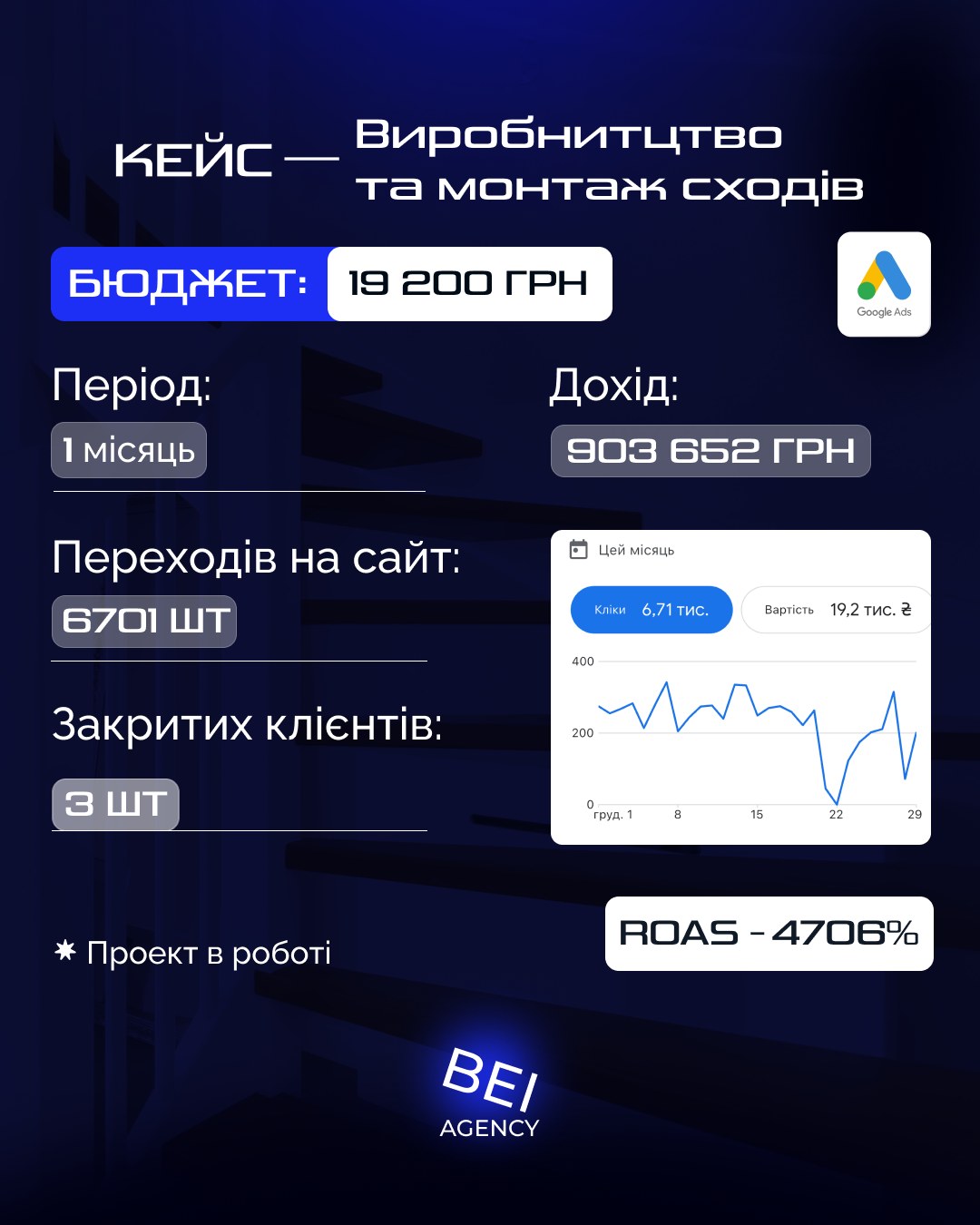
The source does not show total leads or qualified enquiries. It also does not disclose the dates of first contact, order agreement or payment receipt. There is therefore no basis for claiming that all 3 clients first enquired during the reporting month. The poster confirms a period summary but does not provide each deal’s full history. That is an important boundary when interpreting the results accurately.
A calendar report and a report by enquiry date
A calendar report conveniently shows spend and deals closed during a chosen month. Separately, I recommend grouping enquiries by the date they arrived and updating their outcomes later: a deal, a decline or still in progress. This lets the owner see what happened to that particular group of enquiries. These are different views of advertising performance and should not be combined into one metric without explanation.
Consider a hypothetical example unrelated to dometall: someone enquires near month-end and agrees an order the following month. A report by deal-closing date will show the result later. A report by enquiry date will add it to the original enquiry group. Comparing only current spend with current closings can lead to a premature assessment before the manager finishes their work. This illustrates the principle, not an established sequence from this case.
What records are enough to reconcile the results
Start with an enquiry identifier, arrival date, source, responsible manager, current status and deal date. Keep the agreed order value separate from payments actually received. At an agreed interval, return to unresolved enquiries and update their outcomes. This is a recommendation for a new project; I am not claiming that dometall used this exact record-keeping setup.
Our homepage portfolio includes a building-material supplier creative aimed at shop owners. It illustrates a specific message to a business buyer, but does not establish negotiation length or dometall’s results. For stair manufacturing and material supply alike, my recommendation is to retain the link between the initial enquiry and the client’s final decision. This article’s figures belong solely to the stair-manufacturing case.
Conclusion: 3 clients and 903,652 UAH need the context of dates
3 clients, 903,652 UAH in revenue and 19,200 UAH spent in one month are the confirmed basis of this analysis. A separate calculation, 19,200 ÷ 3 = 6,400 UAH spent per closed client, requires no rounding but does not explain the deals’ journeys by itself. To evaluate your advertising, reconcile enquiry and closing dates. The source does not specify campaign formats, so I do not attribute this result individually to Search, Shopping or Performance Max.
At Bei Agency, the first month of Google Ads setup and management carries no agency fee and starts after campaigns launch. Advertising spend is separate. If we continue, management from month two costs $550 per month, including advertising materials and a designer. Leave an enquiry so we can discuss your task and how to verify the results.
Discuss Google Ads for your manufacturing business